
TLDR
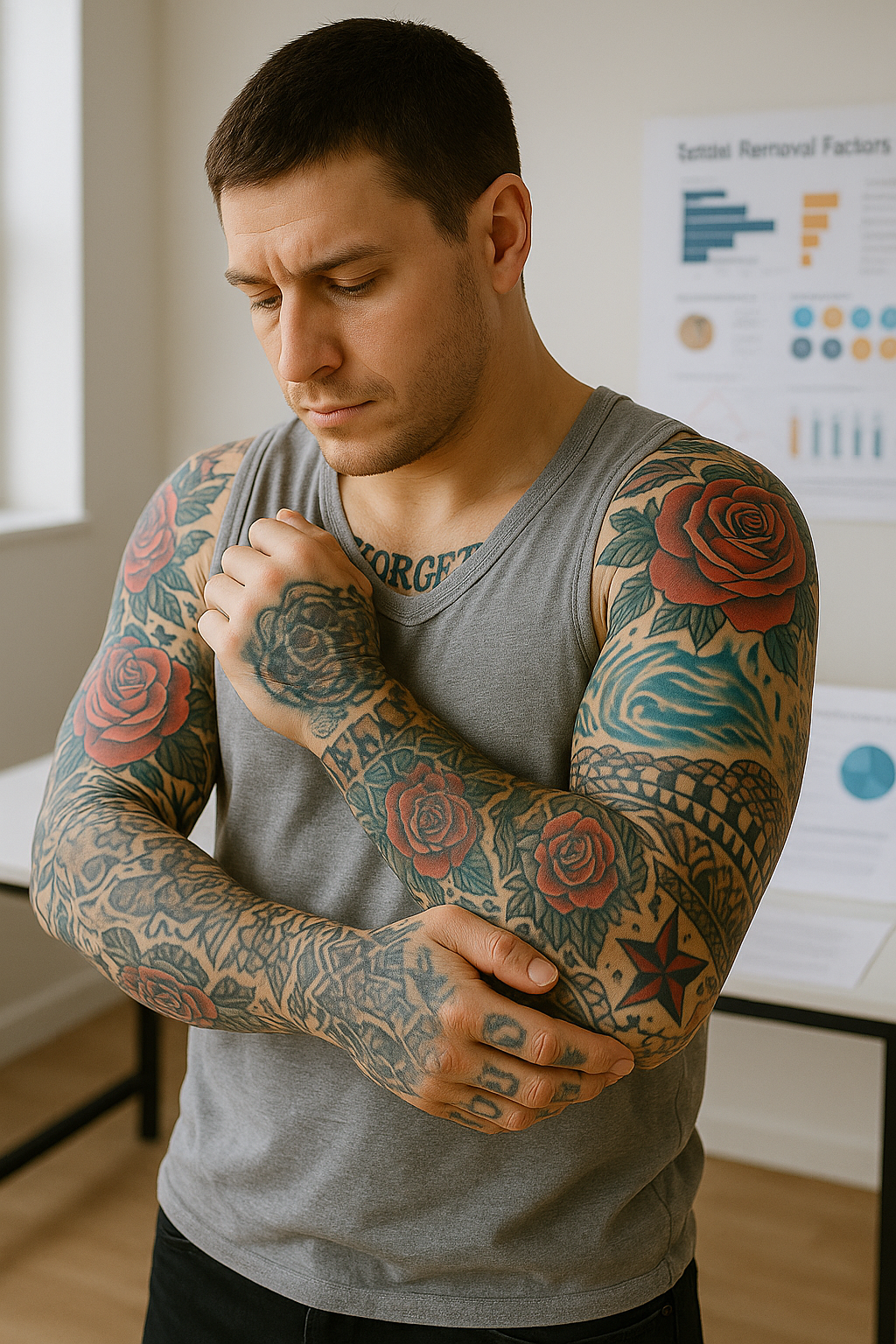
Tattoo removal success depends on several factors. The tattoo’s age, location (closer to the heart is better), ink colors (black is easiest, blue/green can be stubborn), and whether it was done by a professional or amateur all play a role. Your skin type, overall health, and lifestyle choices (like smoking) also significantly impact how quickly and effectively your body can clear the ink. A personalized consultation with a medical professional is the best way to get an accurate assessment for your specific tattoo.
You’ve made the decision to start your tattoo removal journey. You’ve learned about the entire process, prepared for aftercare and your first session, understood the cost, weighed removal vs. a cover-up, debunked the common myths, and know how to choose the right provider. Now, you’re likely wondering: “How long will this actually take for me?”
This is one of the most common questions we hear at our Tulsa clinic, and the honest answer is: it depends. Laser tattoo removal is not a one-size-fits-all process. The speed and success of your treatment are influenced by a unique combination of factors related to your tattoo, your skin, and your overall health. Understanding these variables will help you set realistic expectations and empower you to take an active role in achieving the best possible results. This guide will break down the key factors that determine how your tattoo will respond to laser treatment.
1. Factors Related to Your Tattoo
Not all tattoos are created equal. The characteristics of your specific tattoo play a major role in how it will respond to laser treatment.
Age of the Tattoo: An older tattoo is generally easier to remove than a brand new one. Over many years, your body’s immune system has already been trying to break down the foreign ink particles, causing the tattoo to naturally fade and blur. An older tattoo has had a head start on the fading process, making it more responsive to the laser.
Ink Colors: As we discussed in our myths article, different colors absorb different wavelengths of light. Black is the easiest color to remove because it absorbs all laser wavelengths. Reds and oranges are also typically easy to treat. Blues, greens, and purples can be more stubborn and often require a specific laser wavelength (like the 785nm on the PicoWay®) for effective removal. White, yellow, and pastel colors are the most challenging, as they reflect more light and may require more sessions.
Amount and Density of Ink: A dense, heavily saturated tattoo with a lot of ink will require more sessions to remove than a lightly shaded one. The laser has to break down more pigment in a dense tattoo, which is a layer-by-layer process.
Professional vs. Amateur Tattoo: Amateur tattoos are often easier to remove. They are typically done with less ink, and the ink is not placed as deeply in the skin as it is with a professional tattoo. Professional tattoos are designed to be permanent, with high-quality ink placed evenly and deeply in the dermis, which makes them more challenging (though still very removable) to treat.
Cover-Up Tattoos: If your tattoo is a cover-up, it is essentially two tattoos in one. This means there is a much higher density of ink in the skin, often with multiple layers of different colors. Cover-up tattoos are among the most challenging to remove and will almost always require more sessions than a single tattoo.
2. Factors Related to Your Body
Remember, the laser only shatters the ink; your body does the actual removal. Therefore, your overall health and skin characteristics are critical to the success of the treatment.
Location on the Body: The location of your tattoo matters because of your circulatory system. Tattoos closer to your heart, where blood flow is strongest, will fade faster. This is because the tiny, shattered ink particles are carried away by your immune cells via the bloodstream. Tattoos on the torso, neck, and upper arms tend to fade more quickly than those on the hands, feet, and ankles, where circulation is less robust.
Skin Tone (Fitzpatrick Scale): Your skin tone, classified by the Fitzpatrick scale, is an important factor. The laser works by targeting the pigment in the tattoo ink. In individuals with darker skin tones, the laser can also be absorbed by the natural melanin in the skin, which increases the risk of side effects like hypopigmentation (lightening of the skin). A skilled medical professional will use a longer wavelength laser (like the 1064nm) and more conservative settings on darker skin to minimize this risk. While tattoo removal is safe for all skin tones, it may require more sessions and a more cautious approach for those with more melanin.
Your Immune System and Overall Health: A strong, healthy immune system is your best friend in the tattoo removal process. Since your body is responsible for clearing the ink, anything you can do to support your immune system will help your results. This includes getting enough sleep, eating a healthy diet, staying hydrated, and managing stress.
Lifestyle Choices (Smoking): Smoking is one of the biggest hindrances to successful tattoo removal. Numerous studies have shown that smoking significantly reduces the chances of successful removal after 10 sessions by up to 70%. Smoking constricts your blood vessels, impairs circulation, and weakens your immune system, making it much harder for your body to flush out the ink particles. If you are a smoker, quitting will dramatically improve your results.
3. The Most Important Factor: Your Provider
While all the factors above play a role, the single most important factor in your tattoo removal success is the one you have the most control over: choosing the right provider. As we detailed in our guide to choosing a provider, an experienced medical professional with the right technology will know how to navigate all these variables to create a safe and effective treatment plan tailored specifically to you.
- They will correctly assess your skin type and choose the appropriate laser settings.
- They will have the multi-wavelength technology to treat all the colors in your tattoo.
- They will create a treatment schedule that gives your body enough time to heal and clear the ink between sessions.
- They will provide you with the guidance you need to support your body’s healing process.
A Personalized Path to Clear Skin
As you can see, every tattoo removal journey is unique. While it’s impossible to predict the exact number of sessions you’ll need without a personal assessment, understanding these factors can help you have a realistic picture of the road ahead. The best way to get a clear and accurate estimate is to have your tattoo evaluated by a medical professional.
At our Tulsa clinic, we offer a free, no-obligation consultation where we will assess your tattoo, consider all these influencing factors, and provide you with a personalized treatment plan and a clear estimate of the number of sessions you can expect. We are committed to partnering with you to achieve the best possible results, safely and effectively.
Book your free consultation online or call us at (918) 625-1480. Let’s work together to create your personalized path to clear skin.