
TLDR
Proper aftercare is crucial for successful laser tattoo removal. For the first 48 hours, keep the area clean, dry, and iced. Expect redness, swelling, and tenderness. Over the next 1-2 weeks, you may see blisters and scabs—do not pick at them. Complete healing takes 6-8 weeks, which is why sessions are spaced apart. Avoid sun exposure, swimming, and hot tubs during recovery. Following professional aftercare instructions minimizes scarring, speeds healing, and ensures the best possible results from your PicoWay® treatments in Tulsa.
Congratulations on taking the first step toward removing your unwanted tattoo! You’ve learned how advanced PicoWay® technology works and chosen a licensed medical professional to guide your journey. But the laser treatment itself is only half the battle. What you do in the hours, days, and weeks after each session is just as critical to achieving the clear, healthy skin you want.
Proper aftercare isn’t just about preventing infection—it’s about maximizing your results. A well-managed healing process helps your body flush out shattered ink particles more efficiently, reduces the risk of side effects like scarring or pigmentation changes, and can even decrease the total number of sessions you’ll need. This guide covers the laser tattoo removal healing process, from the moment you leave our Tulsa clinic to the day you’re ready for your next session.
The First 48 Hours: Immediate Aftercare Instructions
The moments immediately following your laser treatment are critical for setting the stage for successful recovery. Your skin has just been exposed to intense energy and needs to be treated with care. Think of it as managing a controlled wound—your goal is to keep it clean, calm, and protected.
What to Expect Right Away
Immediately after your session, you’ll notice a white, frosted appearance on your tattoo. This “frosting” is a normal, temporary reaction caused by rapid heating of ink particles, which releases carbon dioxide gas on the skin’s surface. This effect typically subsides within 15-30 minutes. You’ll also experience redness, swelling, and a sensation similar to a moderate sunburn. This is your body’s natural inflammatory response and a sign that healing has begun.
Your Immediate Aftercare Protocol
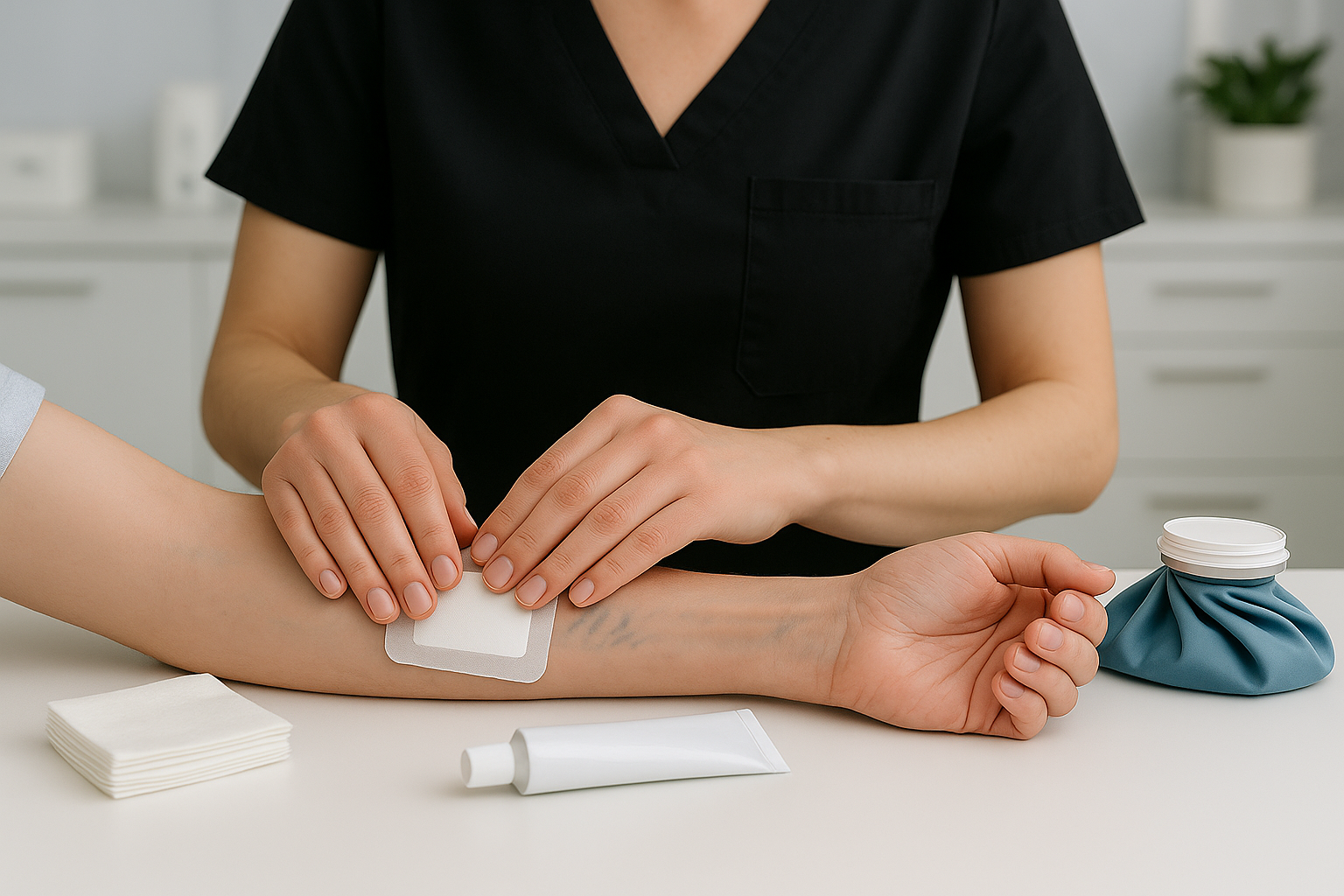
1. Keep the Area Clean and Dry: Your practitioner will apply healing ointment and cover the area with a sterile bandage. Leave this bandage on for at least a few hours, up to 24 hours as instructed. Avoid getting the area wet during this time.
2. Apply Cold Compresses: To manage swelling and discomfort, apply an ice pack wrapped in a thin towel for 10-15 minutes at a time, several times daily. This helps reduce inflammation and soothe the sunburn-like sensation.
3. Elevate the Area: If your tattoo is on an arm or leg, elevating it above your heart can help minimize swelling, especially in the first 24 hours.
4. Avoid Strenuous Activity: For the first 48 hours, avoid intense exercise, saunas, or any activity causing excessive sweating. This minimizes irritation and reduces infection risk.
5. Pain Management: Over-the-counter pain relievers like acetaminophen can be used if needed. Avoid aspirin or ibuprofen, as they can thin blood and potentially increase bruising risk.
Week 1-2: The Active Healing Phase
After the initial 48 hours, your body transitions into active healing. This is where you’ll see the most noticeable changes as your skin works to repair itself and clear away shattered ink particles. Patience and gentle care are paramount during this stage.
What to Expect
During the first week, it’s common to develop blisters or small vesicles on the treated area. While they may look alarming, blisters are normal and indicate your immune system is actively working. They act as a natural bandage, protecting underlying skin from infection. It is absolutely crucial that you do not pick or pop these blisters. Doing so can lead to scarring, infection, and longer recovery time.
As blisters heal, they naturally flatten and form a scab or crust over the tattoo. This is another protective layer that shields the new, delicate skin underneath. Allow these scabs to fall off naturally, which typically happens within 10-14 days.
Your Aftercare Protocol for Week 1-2
1. Gentle Cleansing: After the first 24-48 hours, gently clean the area with lukewarm water and mild, fragrance-free soap. Do not scrub or use abrasive cloths. Pat dry with a clean, soft towel.
2. Apply Healing Ointment: Apply a thin layer of prescribed antibiotic or healing ointment (like Aquaphor) to the area 2-3 times daily. This keeps skin moisturized, prevents scab cracking, and provides a bacterial barrier.
3. Keep it Covered: Continue covering the area with sterile, non-stick bandages, especially if it might rub against clothing. Change bandages daily or when wet or dirty.
4. Avoid Sun Exposure: Treated skin is extremely sensitive to UV radiation. Keep the area completely covered and out of the sun. Sun exposure can cause hyperpigmentation, increase scarring risk, and affect future treatment efficiency.
5. No Soaking: Avoid swimming pools, hot tubs, baths, and saunas. Soaking can introduce bacteria and soften scabs, causing premature removal.
Week 3-8: The Recovery and Fading Phase
Once scabs have naturally fallen off, you’ll enter the final recovery phase before your next session. During this time, your skin continues healing, and you’ll start seeing rewarding results as the tattoo begins to fade.
What to Expect
After scabs are gone, the skin underneath may appear pink, reddish, or slightly shiny. This is new, healthy skin that will gradually return to normal tone and texture over the next few weeks. You may experience some itchiness, which is a normal healing sign. Avoid scratching the area. A gentle, fragrance-free moisturizer can help alleviate itching.
This is when your body’s immune system works hardest. The tiny ink particles shattered by the laser are being carried away by white blood cells through the lymphatic system. This process is gradual, which is why you’ll notice your tattoo continuing to fade for several weeks after initial healing is complete. The 6-8 week interval between sessions is specifically designed to give your body enough time to clear as much ink as possible.
Your Aftercare Protocol for Week 3-8
1. Moisturize Regularly: Keep skin well-hydrated with high-quality, fragrance-free moisturizer. This supports skin health and helps with lingering itchiness.
2. Sun Protection is Non-Negotiable: Even after skin appears healed, it remains sensitive to UV light. Consistently apply broad-spectrum sunscreen with SPF 30 or higher whenever exposed to sun. This prevents long-term pigmentation changes and ensures best possible results.
3. Stay Hydrated and Healthy: A healthy lifestyle supports a healthy immune system. Drinking plenty of water, eating a balanced diet, and avoiding smoking can help your body flush out ink particles more effectively.
4. Monitor Your Skin: Pay attention to how your skin is healing. Redness should gradually fade, and texture should return to normal. If you have concerns, contact your provider.
Do’s and Don’ts of Laser Tattoo Removal Aftercare
The Do’s: Your Checklist for Success
• DO keep the treated area clean and dry for the first 24-48 hours
• DO apply cold compresses to reduce swelling and discomfort
• DO use prescribed healing ointment to keep skin moisturized
• DO cover the area with sterile bandages as instructed
• DO allow blisters and scabs to heal and fall off naturally
• DO drink plenty of water to support your immune system
• DO protect the treated area from sun with clothing and sunscreen
• DO contact your provider if you have signs of infection or unusual side effects
The Don’ts: Common Mistakes to Avoid
• DON’T pick, pop, or scratch blisters or scabs—this is the number one cause of scarring
• DON’T soak the treated area in baths, hot tubs, or swimming pools until fully healed
• DON’T expose the area to direct sunlight or tanning beds
• DON’T use abrasive scrubs, harsh soaps, or heavily fragranced lotions
• DON’T shave the treated area until completely healed
• DON’T schedule your next session too early—allow the full 6-8 weeks for healing
• DON’T ignore signs of infection such as increasing pain, pus, or foul odor
Your Partner in Clear Skin
Navigating the aftercare process is a partnership between you and your provider. While our advanced PicoWay® laser and Zimmer Cryo7 cooling system make treatments at our Tulsa clinic safe and comfortable, your commitment to proper aftercare is what truly unlocks the best possible results. By following this guide, you’re not just healing your skin—you’re ensuring each session is as effective as possible, bringing you one step closer to the clean slate you desire.
If you ever have questions or concerns during recovery, our team at 86Ink is here to support you. We believe that a well-informed client is a successful client, and we’re dedicated to providing guidance you need every step of the way.
Ready to continue your journey to clear skin? If you’ve been following your aftercare and are ready for your next session, or if you’re just starting and want to learn more, we invite you to book your free consultation today. As we discussed in our complete guide to laser tattoo removal in Tulsa, a professional assessment is the first step to a personalized and effective treatment plan.
Questions? Call us at (918) 625-1480 or visit us at: 86Ink Laser Tattoo Removal and Skin Center 11917 S Norwood Ave Suite 112 Tulsa, OK 74137
Licensed • Professional • Results-Driven
Comments
One response
[…] Tulsa,” and “tattoo removal service near me.” You’ve read our guides on the entire process, aftercare, cost, removal vs. cover-up, myths, your first […]